
Winter Is Coming to the Service Drive: What AI Vehicle Damage Assessment Actually Catches on Tires
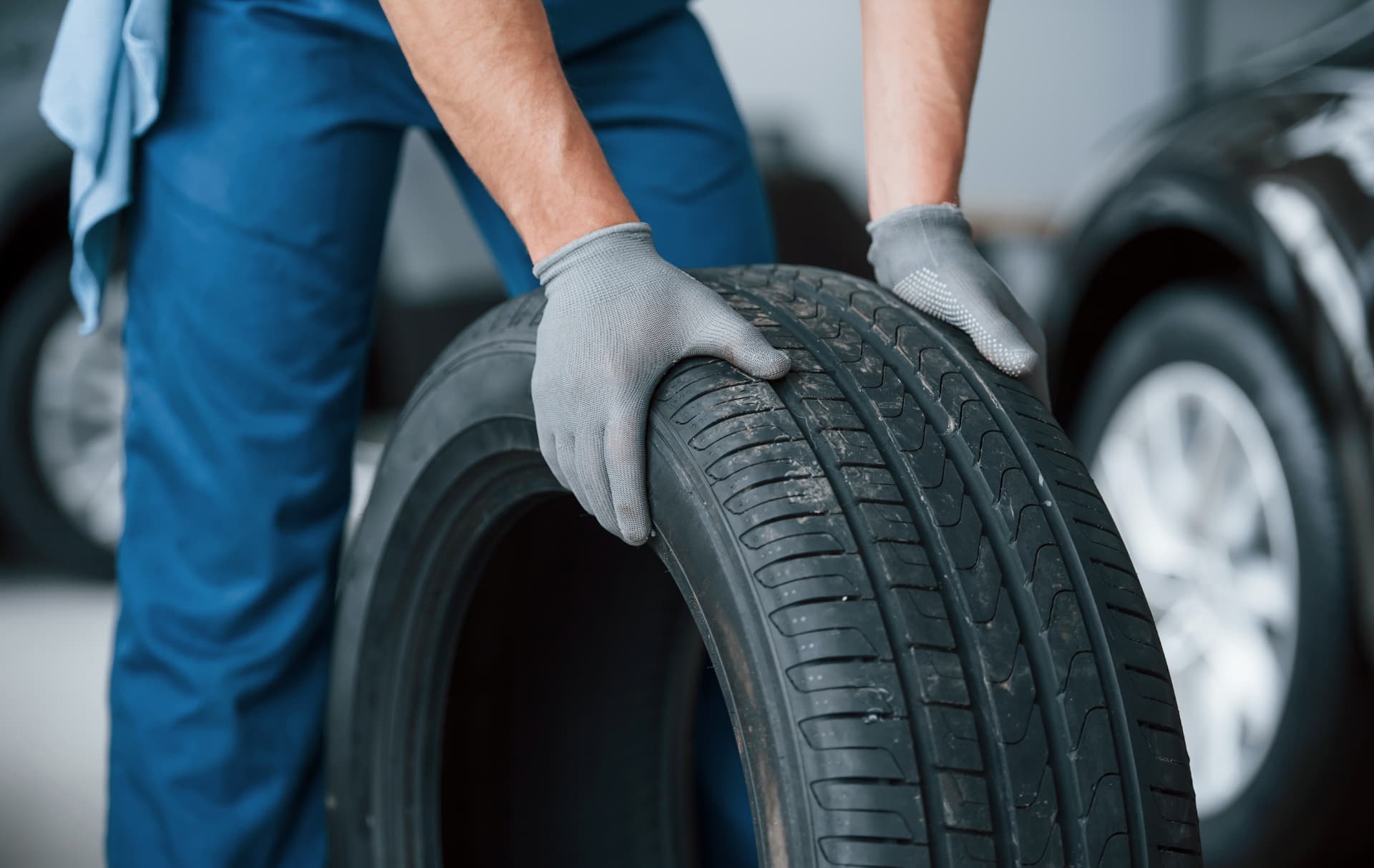
The first real cold snap does something predictable to a dealership. Overnight, tire-pressure warning lights blink on across the region, and by mid-morning the service drive fills with drivers who suddenly want someone to "just take a look at the tires before winter." Winter tire prep is the season's single biggest walk-in conversation — and it's also where the most money, and the most disputes, quietly slip through.
Here's the tension: the vehicles that most need a careful winter inspection show up exactly when your advisors have the least time to give one. That's the gap. And it's the gap that AI vehicle damage assessment is built to close — by capturing a complete, consistent condition record of every vehicle the moment it rolls onto the drive, tires included.
Why winter turns tires into the drive's busiest job
Tires are the only part of a car that actually touches the road, so when conditions get slick they carry the entire safety burden. The stakes are not abstract: according to NHTSA's winter driving guidance, wintry conditions were tied to hundreds of fatal crashes and tens of thousands of injury crashes in a single recent year.
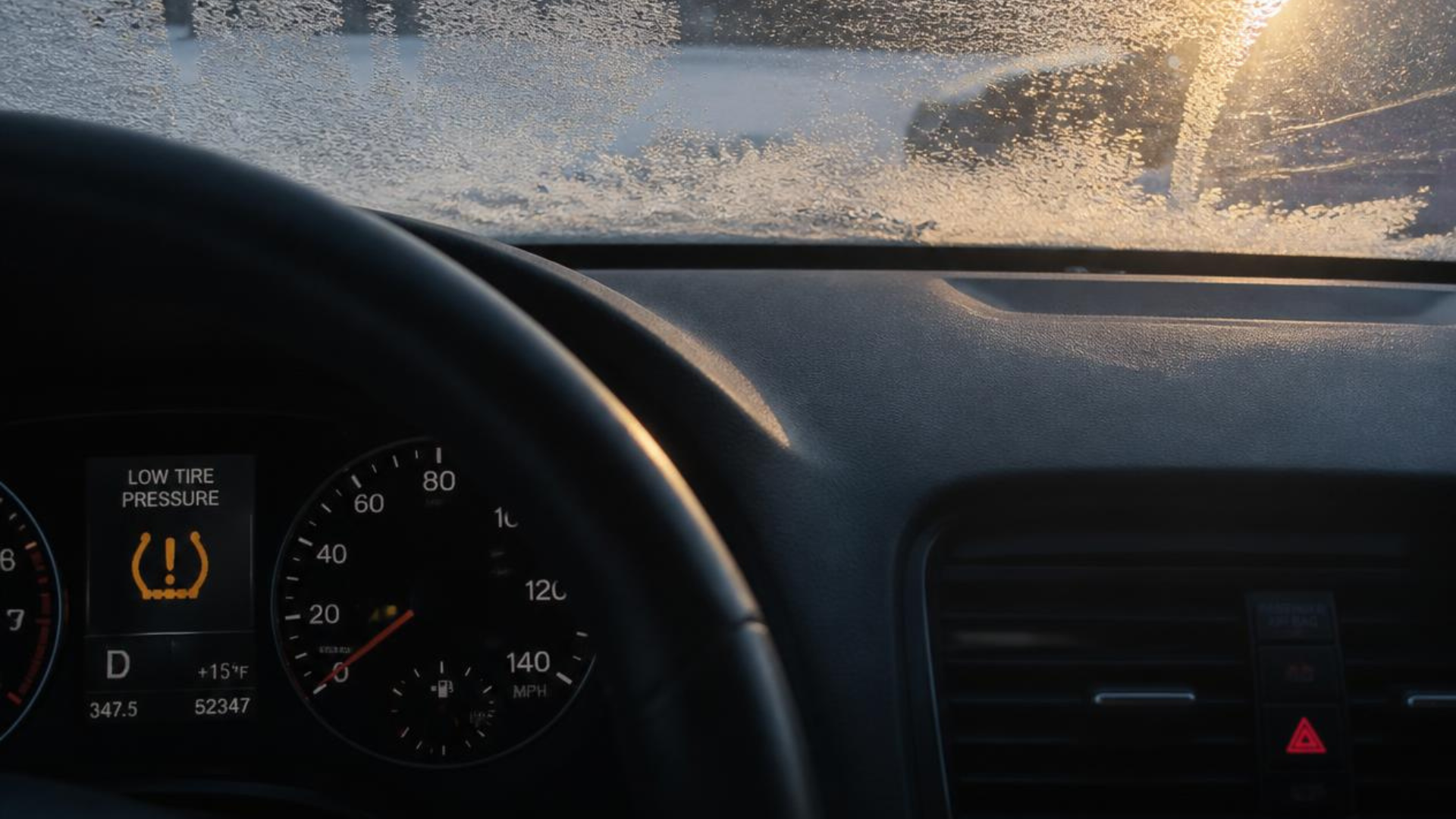
Cold weather also quietly changes the vehicle before anyone touches it. As the temperature falls, so does tire pressure — roughly one PSI for every 10°F drop. A car inflated correctly in September can be meaningfully under-inflated by the first hard freeze, with no leak at all. Under-inflated tires mean longer stopping distances, faster and uneven wear, and worse grip precisely when a driver needs it most. That's why the winter season sends so many vehicles your way, and why "check the tires" is rarely just about tires.
The winter tire checks that actually matter
A genuinely useful winter inspection comes down to a handful of things worth getting right:
- Tread depth. The U.S. Department of Transportation sets 2/32" as the replacement point, and it's the legal minimum in most states — that's what the penny test checks for. But 2/32" is a floor, not a winter target. For wet roads, Tire Rack recommends replacing at around 4/32", and for snow the useful number is higher still: dedicated winter tires lose most of their snow bite once they wear past roughly 6/32". A quick winter rule of thumb for the drive: 4/32" and below is a real conversation, not a "you're fine."
- Inflation, checked cold. Because pressure reads low on a cold morning and rises as the tire warms, it should be checked cold and set to the number on the driver's-side door jamb — not the "max press" figure on the sidewall.
- Winter vs. all-season. NHTSA notes that winter tires outperform all-seasons in deep snow, and the advantage shows up as soon as temperatures sit near or below freezing — useful context for any customer weighing a set.
- Wear pattern and age. Uneven wear points to alignment or inflation problems; cracking and dry rot flag age. Both are easy to miss on a fast walkaround and expensive to ignore.
Everything on that list is real, billable, safety-relevant work. The problem is catching it consistently, on every car, on the busiest days of the year.
What a manual walkaround misses
Under load, a manual inspection compresses. An advisor juggling a full lane can't crouch at all four corners of every vehicle, and no two people grade a tire the same way — so a tire one advisor flags at 4/32", another waves through. The findings that don't get captured don't get quoted, and the winter work that could have been surfaced simply drives off the lot. Worse, when there's no record of a vehicle's condition at arrival, a scuffed wheel or a curbed rim discovered later becomes an "it was already like that" dispute you can't win.
That inconsistency is the quiet cost of winter season: missed revenue on one side, avoidable disputes on the other — and, most seriously, a real safety risk when a worn or under-inflated tire heads out onto icy winter roads undetected.
What AI vehicle damage assessment looks like on a live service drive
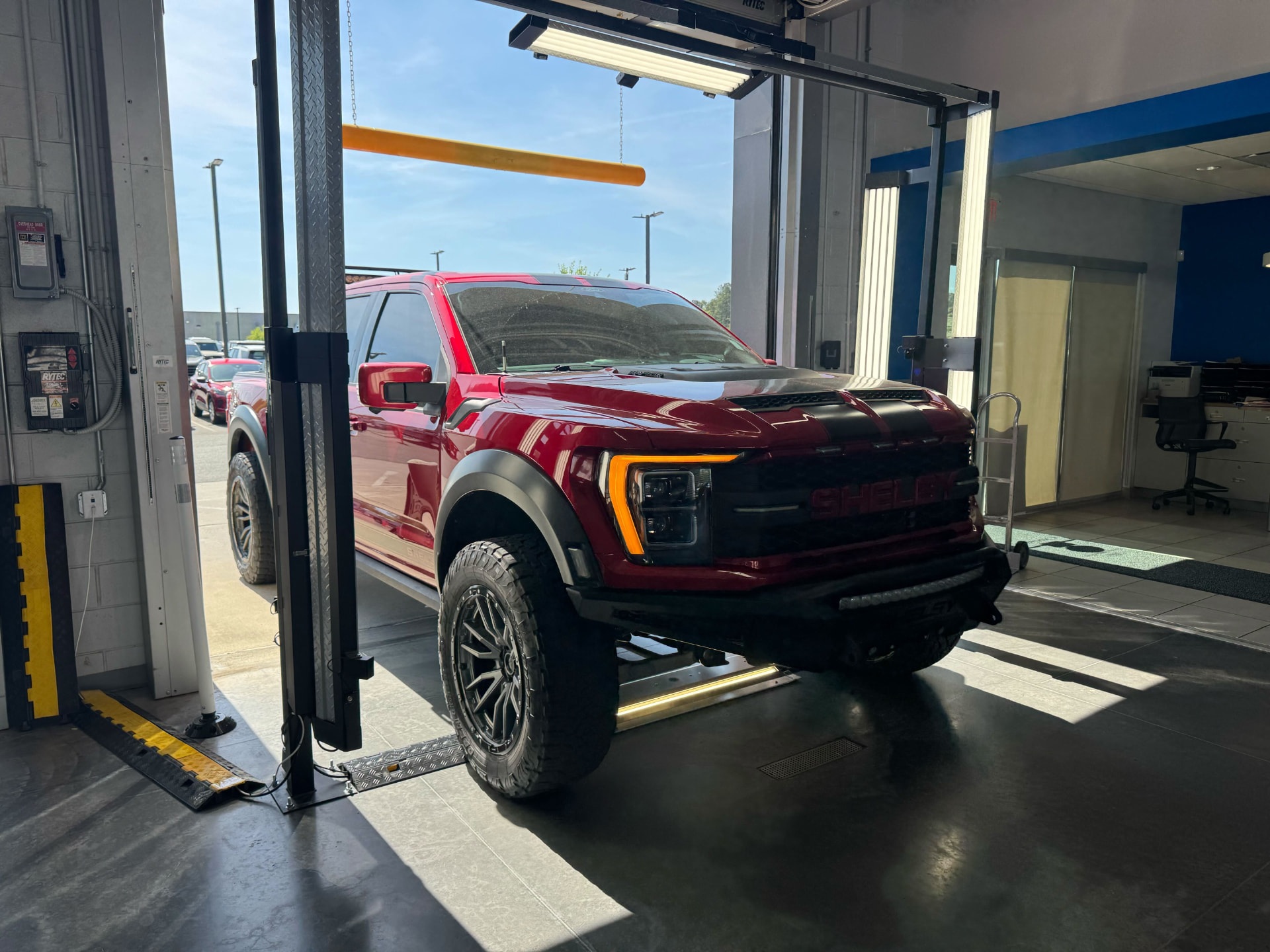
This is where the theory meets the lane. Instead of relying on whoever has a spare minute, AI vehicle damage assessment turns the drive-in itself into the inspection. As a vehicle enters, LumaScanner's 360° fixed scanner captures it in about 90 seconds and computer vision detects and costs damage and wear automatically — cosmetic damage, panel condition, and tire wear across the whole vehicle. The output isn't a hurried note; it's a timestamped condition report with images, generated the moment the car arrives. And because the read is automated, it's consistent by default — the same detection standard applied to every vehicle whether the lane is empty or slammed, so a tire at 4/32" gets flagged the same way every time instead of depending on who happened to walk it.
Three things change on the drive:
- Every vehicle is assessed the same way — the same detection standard on the busiest Monday as on a slow Tuesday, regardless of who's working.
- Nothing waits on advisor bandwidth — capture is automatic, so your team stays with customers instead of walking the lot.
- There's a record from minute one — a dated, visual account of exactly how each vehicle showed up.
For tires specifically, that means worn tread and uneven wear are surfaced and documented on arrival, not discovered later or missed entirely.
Turning winter tire season into revenue — and trust
Consistency is what converts winter demand into results. When every vehicle gets the same complete read, worn tires and related wear stop slipping through, which turns unseen work into quoted, approved work — the core of capturing fixed-ops service revenue. Photo-backed, AI-verified findings also help customers say yes: it's far easier to approve a set of tires when you can see the tread on your own car rather than take a service writer's word for it.
The same record protects the relationship in the other direction. A timestamped arrival report means a damage question at pick-up is settled in seconds, not argued. And the value doesn't stop at the service lane — the same accurate condition profile speeds up used-car reconditioning and trade appraisals when winter trade-ins start rolling in.
Winter tire season is coming either way. The dealerships that come out ahead are the ones that can inspect every vehicle accurately, capture the work that's genuinely there, and document condition so cleanly that disputes never start.