
Best AI Inspection Tools for Dealership Reconditioning
What to look for in an AI inspection tool for recon — how the best ones cut time-to-line, document damage consistently, and keep cars moving toward the front line.
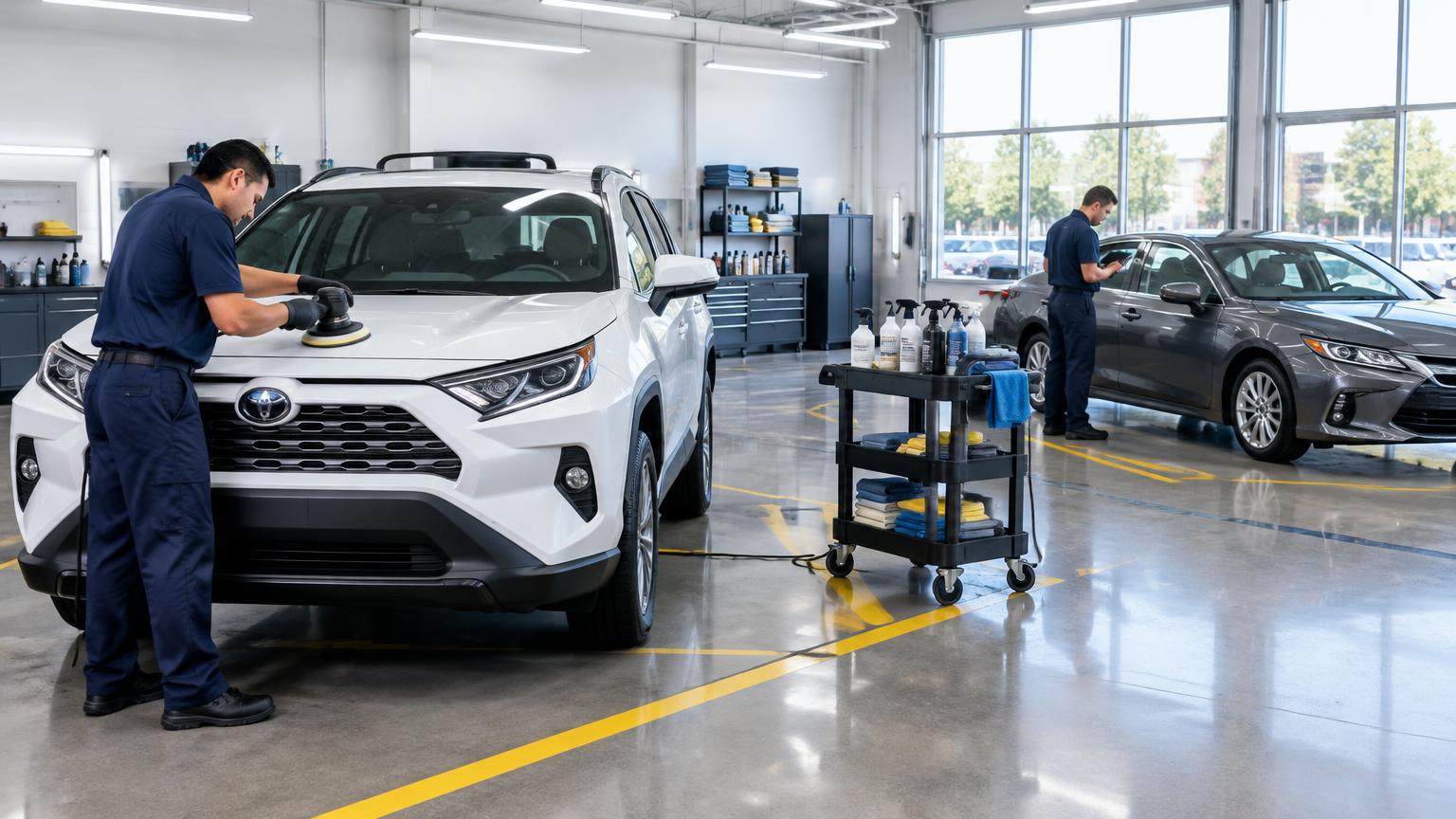
The short answer: The best AI inspection tools for reconditioning do three things well. They detect damage the same way every time at intake, they document each finding with a dated, time-stamped photo and repair estimate, every time, and they hand that record straight to the recon workflow so a car moves toward the front line instead of waiting on a clipboard. Consistency and speed are the whole game. A tool that only takes pictures isn't an inspection tool. It's a camera.
Reconditioning runs on one number: time to line
The moment a store takes in a used vehicle, the clock starts running toward retail-readiness. The industry calls that stretch time to line (T2L) — the window between acquiring a car and getting it retail-ready and photographed for the lot. NADA's benchmark is three days. Most managers will tell you five. The honest number, when someone actually measures it, lands between seven and twelve.
That gap has a price tag. NCM Associates puts the average dealership’s holding cost at roughly $40 per vehicle per day in holding cost — depreciation, floorplan interest, and capital parked in a car nobody can buy yet. Shave six days off recon across a hundred units and the recovered margin runs well into five figures a month, before you count the extra inventory turn you pick up by freeing that capital sooner.
So the real question isn't "does this tool find scratches." It's "does this tool get cars to the line faster without letting damage slip through." Hold every tool below to that bar.
Where the time actually leaks: the walkaround
A trade-in rolls in on a Tuesday. A tech grabs a clipboard, circles the car, and writes down what he sees — which depends on the light in the lane, how rushed he is, and how many walkarounds he's already done that morning. He notes a scuffed rocker panel but misses a mismatched tire on the rear axle and a cracked skid plate on the undercarriage. Neither makes it onto the initial reconditioning estimate, so parts orders one tire instead of two and skips the undercarriage line item entirely. Nobody catches the gap until detail, two days later, and now the car bounces back for a second round of parts and labor that could have been scoped — and approved — on day one.
That's the leak. Not the big stuff — the small, subjective calls that a busy service lane makes a hundred times a week. A human walkaround is only as consistent as the human doing it, and consistency is exactly what a recon pipeline needs to plan parts, labor, and sublets without backtracking.
What separates a real AI inspection tool from a glorified camera
When you're comparing tools, five things actually move T2L:
- Consistent detection, not just capture. The system should flag dents, scratches, chips, and curb rash to the same standard on every unit — 7 a.m. or 7 p.m., first car or fiftieth. That standard is what lets a used-car manager trust the write-up without re-walking the car.
- A time-stamped photo record per finding. Every flagged item needs a dated, time-stamped image and a repair estimate behind it — logged the same way on every car. That record kills the "was this us or the auction" argument and gives you evidence you can put in front of a customer at the trade-in desk, not just a defensible condition report for CPO, wholesale, or a later dispute.
- It feeds the workflow, not a folder. Findings should drop into your recon or DMS workflow so the parts order, the approval, and the detail ticket can start in parallel — not sit in an export nobody opens.
- Throughput that fits the lane. A tool that adds minutes per car at intake is a tax on T2L. The scan has to be fast enough to run on every unit, not just the ones someone remembers to flag.
- An install and cost model you can actually say yes to. Infrastructure, pit construction, and tiered pricing are how "we'll pilot it" becomes "we never rolled it out." The footprint and the contract matter as much as the AI.
Think of the right tool as a standard set of eyes bolted to the front of your recon process — one that never gets tired, never eyeballs a quarter of the hood and multiplies, and never forgets to write it down.
Where LumaScanner fits
LumaScanner is Tractable's AI vehicle inspection system, built for exactly this problem: getting a consistent, documented condition read on every car at intake so recon can start clean. It captures the vehicle as it passes through, runs AI damage detection, and produces a dated, time-stamped photo record paired with a repair estimate for what it found — the same way, every car, every time. That consistency is what turns a subjective walkaround into documented evidence you can use in a trade-in conversation.
Two things make it practical for a dealership rather than just impressive in a demo. First, the footprint: LumaScanner runs on a lighter-infrastructure build than drive-through tunnel systems — no pit construction, no dedicated bay, a meaningfully smaller physical footprint, and an install measured in hours rather than weeks (roughly a five-hour install, with about 30 days from signed contract to go-live). Second, the pricing is flat and single-tier, so the math at one rooftop is the math at twenty. No "call us for enterprise."
The payoff shows up downstream. LumaScanner customers have seen a 2.4x lift in repair approvals — more of the damage that's genuinely there gets documented, surfaced, and approved instead of discovered late or written off. In a recon context, that's the difference between a car that moves through clean and one that bounces.
The bottom line
The best AI inspection tool for reconditioning is the one that documents every car the same way, every time, and gets out of the way so it keeps moving. Find the damage. Date it and time-stamp it. Attach a repair estimate. Feed it forward. That consistent, documented condition record is what backs up a reconditioning estimate, a wholesale number, or a trade-in offer when someone asks you to prove it. Everything else is a camera with a subscription.
Frequently asked questions
What is an AI vehicle inspection tool?
An AI vehicle inspection tool uses cameras and computer-vision models to detect and document exterior damage — dents, scratches, chips, curb rash — automatically as a car is scanned, producing a consistent, dated and time-stamped condition record — photo plus repair estimate — without a manual walkaround.
How does AI inspection speed up reconditioning?
It shortens time to line by catching damage consistently at intake, so parts, labor, and sublets can be scheduled on day one instead of being discovered mid-process. Fewer comebacks, fewer surprises at detail, faster path to the front line.
How much does reconditioning delay actually cost?
NCM Associates puts the average dealership’s holding cost at roughly $40 per vehicle per day. With real-world recon times often running 7–12 days against a 3-day benchmark, trimming even a few days per unit recovers meaningful margin across a month of inventory.
Do AI inspection tools require a lot of infrastructure to install?
They vary widely. Heavy drive-through systems can need pit construction and weeks of build-out. LumaScanner is designed as a lighter-footprint alternative, with an install measured in hours and roughly 30 days from signed contract to running.
What should a dealership look for when choosing a tool?
Consistent detection on every unit, a dated and time-stamped photo record with a repair estimate per finding, a feed into the recon or DMS workflow, throughput fast enough to scan every car, and an install and pricing model simple enough to actually roll out across stores.